
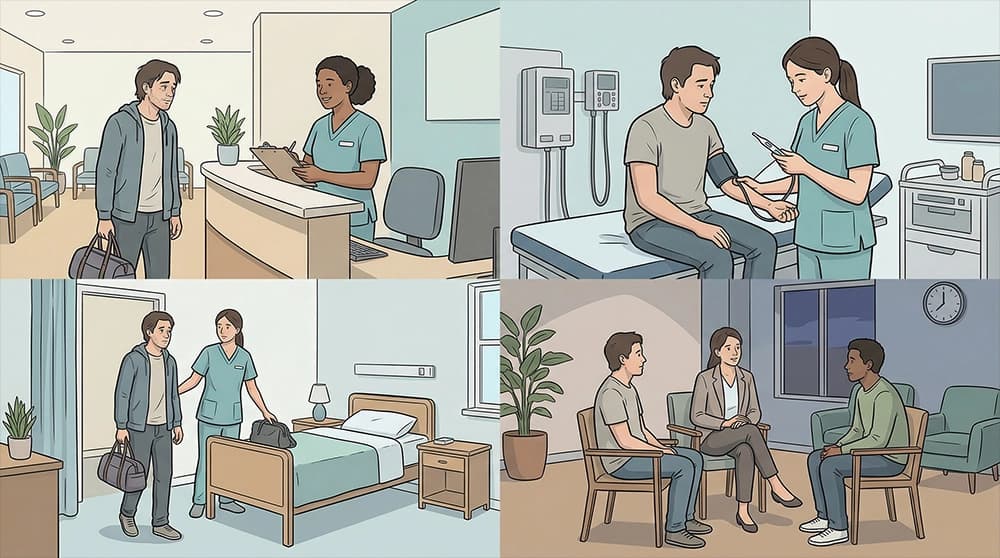
Your first day in detox involves intake paperwork, a comprehensive medical assessment, vital sign monitoring, medication planning, facility orientation, and settling into your room. Understanding the process ahead of time reduces anxiety and helps you arrive prepared.
- 1The intake process gathers your medical history, substance use background, and personal information to create a safe, individualized treatment plan.
- 2A comprehensive medical assessment including vital signs, lab work, and physical examination happens within your first few hours.
- 3Medications may be started on day one to manage withdrawal symptoms and keep you as comfortable and safe as possible.
- 4Facility orientation and room assignment help you become familiar with your environment and reduce first-day anxiety.
- 5Staff are available around the clock from the moment you arrive—asking questions and expressing concerns is always encouraged.
Deciding to enter a detox program is one of the most significant steps a person can take toward recovery. It is also one of the most anxiety-producing. The uncertainty of not knowing what happens behind those doors keeps many people from walking through them. Understanding what your first day in detox actually looks like—hour by hour—can help replace that anxiety with preparation and confidence.
At Surf City Detox in Huntington Beach, every part of the first-day experience is designed with your comfort and safety in mind. From the moment you arrive, our team's goal is to help you feel welcomed, informed, and supported as you begin this process. Here is what to expect.
Arrival and Check-In
When you arrive at the facility, a staff member will greet you and walk you through the check-in process. This initial step typically takes 30 to 60 minutes and involves completing intake paperwork that covers your personal background, emergency contacts, insurance information, and consent forms for treatment.
During check-in, you will also meet with an admissions coordinator who serves as your guide through the first few hours. They will explain facility rules, daily schedules, phone policies, and visiting hours. This is the right time to ask any questions that have been on your mind—about the program, the facility, your room, or what to expect in the coming days.
Honesty during intake matters. The information you provide directly shapes your treatment plan, medication decisions, and the level of monitoring you receive. The more your clinical team knows about your history, the better they can support you safely.
The Medical Assessment
The medical assessment is one of the most important parts of your first day. Within your first few hours, a licensed healthcare provider will conduct a comprehensive evaluation that examines multiple dimensions of your health and substance use history.
This assessment includes a detailed review of your medical history, current medications, allergies, and any previous treatment experiences. The provider will ask about the substances you have been using, how long you have been using them, how much you typically use, and when your last use occurred. They will also ask about your mental health history, including any diagnoses, medications, or symptoms like anxiety or depression.
A physical examination follows, along with baseline measurements of your vital signs: blood pressure, heart rate, temperature, respiratory rate, and oxygen levels. Laboratory tests may be ordered to check organ function, screen for infections, and establish a complete picture of your current health status.
None of this is about judgment. The assessment exists to create an individualized treatment plan that accounts for your unique medical profile. Two people entering detox on the same day may have very different withdrawal risks, medication needs, and monitoring requirements. The assessment ensures that your care is tailored to you specifically.
Medication Planning and Initial Comfort Measures
Based on the results of your medical assessment, the clinical team will develop a medication management plan designed to keep you as safe and comfortable as possible during withdrawal. Depending on the substance or substances involved, this may include medications to reduce cravings, manage anxiety, prevent seizures, address nausea, support sleep, or stabilize blood pressure and heart rate.
Your provider will explain what each medication does, why it is being prescribed, what side effects to watch for, and how to communicate if something does not feel right. You are always encouraged to ask questions about your medications and report how you are feeling throughout the process.
Initial comfort measures also extend beyond medication. Hydration, nutrition, and rest all play a role in supporting your body during detox. If you have dietary needs or restrictions, let staff know so they can accommodate your preferences at mealtimes.
Facility Orientation and Getting to Know Your Environment
After your medical assessment, a staff member will take you on a tour of the facility. You will see the common areas, dining room, counseling rooms, outdoor spaces, and the residential wings where you will be staying. Knowing the layout of your environment reduces the disorientation that many people feel on their first day.
During the orientation, you will learn about daily routines, meal times, group session schedules, recreational activities, and quiet hours. Understanding the structure of each day helps set expectations and provides a sense of predictability that many people find reassuring during an otherwise uncertain time.
You will also be introduced to key staff members—nurses, counselors, and support staff—who will be part of your care team. Putting faces to roles early on makes it easier to reach out when you need something.
Room Assignment and Settling In
Once orientation is complete, you will be shown to your room where you can unpack personal items and get comfortable. Most detox programs offer private or semi-private rooms with basic furnishings, linens, and a bathroom. Staff will explain any roommate policies, housekeeping expectations, and how to request additional items like extra blankets or pillows.
Taking a few minutes to organize your space can help the environment feel more personal. Some people find it helpful to set out familiar items—a family photo, a journal, or a book—that provide a sense of connection to life outside the facility. Staff are available if emotions surface during this adjustment period.

Your First Meal and Group Orientation
Your first meal in the facility provides another anchor point in the day. Eating well supports your body during detox by replenishing nutrients, stabilizing blood sugar, and providing energy. Meals are typically served at consistent times, adding structure to the daily routine. If you have dietary restrictions or preferences, make sure staff are aware so they can accommodate your needs.
Later in the day, you may attend a brief group orientation where you will meet other people in the program and learn more about what the coming days will look like. This group introduction helps reduce the sense of isolation that many people feel on arrival. Hearing that others are navigating similar feelings can be genuinely comforting.
The Evening Hours
The evening of your first day is usually quieter. You may have free time to rest, read, write in a journal, or simply adjust to your surroundings. Many people feel physically and emotionally tired by this point—the combination of travel, intake, emotional processing, and early withdrawal symptoms takes a toll.
Medical staff continue monitoring you throughout the night. Vital sign checks happen at regular intervals, and nurses are available if withdrawal symptoms intensify or you need assistance. You are never alone during this process, even during overnight hours.
If sleep is difficult—and it often is during early withdrawal—let your care team know. Medications and comfort measures can be adjusted to help you rest more effectively.
Why the First Day Matters
Your first day in detox sets the foundation for everything that follows. The thorough intake and assessment process ensures your safety. The orientation helps you understand your environment. The medication planning addresses your immediate physical needs. And the welcoming, supportive approach of the staff demonstrates that you are in a place designed around your wellbeing.
Every question you ask and every concern you share helps your team care for you more effectively.
Moving Forward From Day One
Your first day in detox is the beginning of a process—not the whole process. After medical stabilization, many people transition to residential treatment where they continue building recovery skills through therapy, counseling, and structured programming. To understand what happens during the full medical detox process, our detailed guide covers each phase from start to finish. This next step addresses the behavioral, emotional, and psychological aspects of addiction that detox alone cannot resolve.
If you are considering detox and want to understand the admissions process or learn more about our detox programs, Surf City Detox in Huntington Beach is here to help. Our team walks people through this process every day, and we understand the courage it takes to make this decision. You can also verify your insurance to understand your coverage before arriving.
Call 888-222-1506 to speak with an admissions specialist who can answer your questions, explain what to expect, and help you take the first step with confidence.
Medical disclaimer: This article is for informational purposes only and does not constitute medical advice. Always consult with a healthcare provider for personalized recommendations.
Frequently Asked Questions
What documents should I bring to my first day of detox?
Bring a valid photo ID, your insurance card, a list of any current medications with dosages, and information about any allergies or medical conditions. You may also want to bring comfortable clothing, personal hygiene items, and a journal. Contact your admissions coordinator beforehand for a complete list of what to bring and what to leave at home.
Will I be able to contact my family on the first day?
Yes. Most detox facilities designate specific times for phone calls so you can stay connected with family and friends. We encourage family contact because emotional support plays an important role during the adjustment period. Staff will explain phone policies and visiting hours during your orientation.
What happens if I experience severe withdrawal symptoms on my first day?
Our medical team is prepared to manage withdrawal symptoms with appropriate [medications](/blog/detox-medications) and continuous monitoring. The initial assessment specifically evaluates your withdrawal risk so the clinical team can anticipate your needs and respond quickly. You are never alone in managing symptoms—staff are available 24 hours a day.
Can I bring my phone or personal electronics?
Electronic device policies vary by facility. Most programs allow limited phone access during designated times to help you focus on recovery while still staying connected. Ask about your facility's specific policies when you speak with the admissions team during your initial consultation.
What if I feel anxious or have second thoughts about entering detox?
Feeling nervous is completely normal and expected. Every person who has walked through the doors of a detox program has felt some version of what you are feeling. Our staff and counselors are trained to support you through this transition. If anxiety feels overwhelming, talk to any team member—they are here to help. Call Surf City Detox at 888-222-1506 with questions before or after your arrival.
Sources & References
References used for this article.
- Detoxification and Substance Abuse Treatment: A Treatment Improvement Protocol — SAMHSA (2024)
- Principles of Drug Addiction Treatment: A Research-Based Guide — National Institute on Drug Abuse (2024)
- The ASAM Criteria: Treatment Criteria for Addictive, Substance-Related, and Co-Occurring Conditions — American Society of Addiction Medicine (2024)
Surf City Detox