
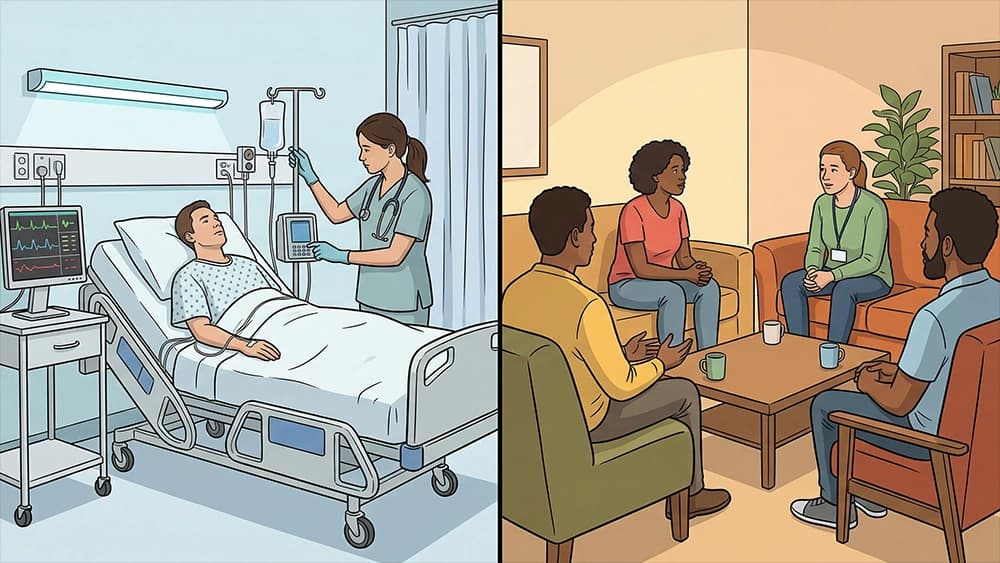
Medically Supervised Detox vs Social Detox: Key Differences explains how the two settings differ, who needs medical monitoring, and what usually happens after detox.
- 1withdrawal can become complicated quickly, especially when timing or potency makes symptoms harder to predict.
- 2Medical monitoring helps prevent the situation from escalating before it becomes dangerous.
- 3Symptoms that involve confusion, dehydration, seizures, or breathing problems need urgent attention.
- 4Detox is the start of the plan, not the finish line.
- 5A safe transition into the next level of care matters as much as the acute phase itself.
For many people in Huntington Beach and the surrounding Orange County area, medically supervised detox vs social detox: key differences is not an abstract topic. It is part of a real decision about safety, stability, and what kind of care will actually help.
When the issue involves withdrawal, the details matter. The difference between short-term relief and a plan that supports lasting recovery often comes down to timing, monitoring, and having the right level of support in place.

What medical supervision adds
Medical detox is built for situations where withdrawal could become unstable. That usually means staff can check vitals, watch hydration, track medication response, and intervene before symptoms become dangerous. Social detox may offer a sober environment and peer support, but it usually does not provide the same level of clinical monitoring.
That difference matters when the person has a history of seizures, severe dehydration, very heavy use, or multiple substances in the picture. In those cases, the risk is not just discomfort. It can become a medical emergency.
Where social detox fits
Social detox can be a useful bridge for some people, especially when the withdrawal picture is mild and a clinician has already cleared the plan. It may help someone stay away from the environment that feeds use and give them a calmer place to regroup.
But social detox does not replace treatment when the symptoms are complex. It is not the right place to hope that a dangerous withdrawal simply settles on its own.
Who usually needs medical supervision
- A history of seizures, delirium, or other complicated withdrawal
- Heavy or long-term alcohol or drug use
- Benzodiazepines, opioids, or multiple substances together
- Severe vomiting, confusion, fever, or trouble keeping fluids down
- Pregnancy, major health issues, or unstable mental health symptoms
If any of those are present, the safer call is usually medical evaluation first.
What the first 24 hours usually focus on
The first day of detox is usually less about "getting through it" and more about getting an accurate picture of risk. Staff may review medications, ask about timing and last use, check vitals, and create a plan for rest, hydration, and symptom relief. From there, the next decision is usually whether the person can step into medical detox, residential treatment, or aftercare after the acute phase.
When the first 24 hours are organized well, the rest of recovery has a much better starting point.
Choosing the safest next step
The best choice is not the one that sounds easiest. It is the one that gives the person enough monitoring to stay safe and enough structure to keep moving forward after detox. If there are questions about where to begin, admissions and insurance can usually be handled while the clinical plan is being discussed.
Why the right setting matters when substances overlap
The setting matters even more when alcohol is not the only substance in the picture. Benzodiazepines, opioids, or stimulant use can make the withdrawal pattern harder to predict, and the team may need to respond to more than one symptom stream at once. In those cases, a medical setting can track the full picture instead of guessing which symptom will become the next problem.
That is the main difference between a place that is simply sober and a place that is clinically equipped. Safety is built into the second option, not left to chance.
What social detox can and cannot do
Social detox can be helpful when the person mainly needs distance from the using environment, basic accountability, and a calmer place to rest. It can work as a bridge when a clinician has already decided the withdrawal risk is low and the person can be monitored safely outside a medical unit.
What it cannot do is replace medical observation, medication support, or rapid escalation if symptoms suddenly worsen. If the plan depends on hoping the body stays quiet, the plan is too thin.
Questions to ask before you choose
Before deciding, ask whether the person has ever had seizures, whether they are using more than one substance, and whether they can keep fluids down. Ask what happens if the symptoms worsen overnight, how the next level of care is arranged, and whether the team will help with residential treatment, aftercare, or admissions once detox is finished.
Those questions turn a vague choice into a safer one.
What medical detox looks like on day one
Day one usually starts with intake questions, vitals, a review of medication history, and a plan for rest and hydration. The team then watches how the person responds instead of assuming the first hour will predict the whole course. That early monitoring is what makes medical detox different from a setting that only provides a quiet room.
If the person needs the extra layer of support that medical detox provides, that is the place to start rather than the place to improvise.
Why the next step should be decided early
Detox is easier to move through when the next step is already on the radar. If the person waits until they feel better, the old routines can start filling the space again. Deciding ahead of time whether the next move is residential treatment, aftercare, or admissions keeps the focus on recovery instead of on uncertainty.
That is usually the difference between a short pause and a real change.
Why planning ahead reduces risk
Planning ahead takes pressure off the first day. If the team already knows whether the next step is residential, PHP, or outpatient care, the person is less likely to drift back into old routines once the acute symptoms start easing. The goal is to keep momentum while the body is still adjusting.
That is why admissions, insurance, and the follow-up level of care should be discussed before detox is over. When the next step is waiting, the recovery plan is much harder to derail. A simple schedule for rides, check-ins, and the first follow-up visit can keep the transition from getting shaky.
It also means the person is less likely to spend the first sober day trying to improvise a next move while still feeling unwell. A small amount of planning now can prevent a much bigger scramble later.
If you want to talk through the situation with a clinician, call Surf City Detox at 888-222-1506. The team can explain the relevant level of care, talk through admissions, and help you understand whether medical detox, residential, PHP, or outpatient care is the right next step.
Related care paths
If you are comparing options or planning the next step, these pages can help you orient the bigger picture.
- detox
- residential treatment
- admissions
Frequently Asked Questions
What makes withdrawal risky?
Risk depends on the substance, how much was used, how long it was used, and whether seizures, delirium, or severe dehydration could develop. The more complex the situation, the more important medical monitoring becomes.
Can withdrawal be managed at home?
Sometimes mild cases can be monitored as part of a broader plan, but more complicated withdrawal should not be handled without clinical guidance. If the person has a history of complications, home-only detox is usually not the safest choice.
What does medical monitoring actually do?
Medical monitoring tracks vital signs, hydration, comfort, medication response, and warning signs that the situation is becoming more dangerous. It lets the team respond early instead of waiting for a crisis.
What comes after the acute phase?
After the acute phase, the next step usually focuses on continuing care, therapy, and relapse prevention. Surf City Detox can explain whether [residential treatment](/programs/residential), [PHP](/programs/php), or [outpatient care](/programs/outpatient) should follow.
When should someone seek urgent help?
Urgent help is needed if there are seizures, trouble breathing, confusion, fainting, severe dehydration, or a rapid worsening of symptoms. Those are signs that the problem is beyond a wait-and-see approach.
Sources & References
References used for this article.
- The ASAM Criteria — ASAM (2024)
- Treatment for Substance Use Disorders — SAMHSA (2025)
- Principles of Drug Addiction Treatment: A Research-Based Guide — NIDA (2018)
Surf City Detox