
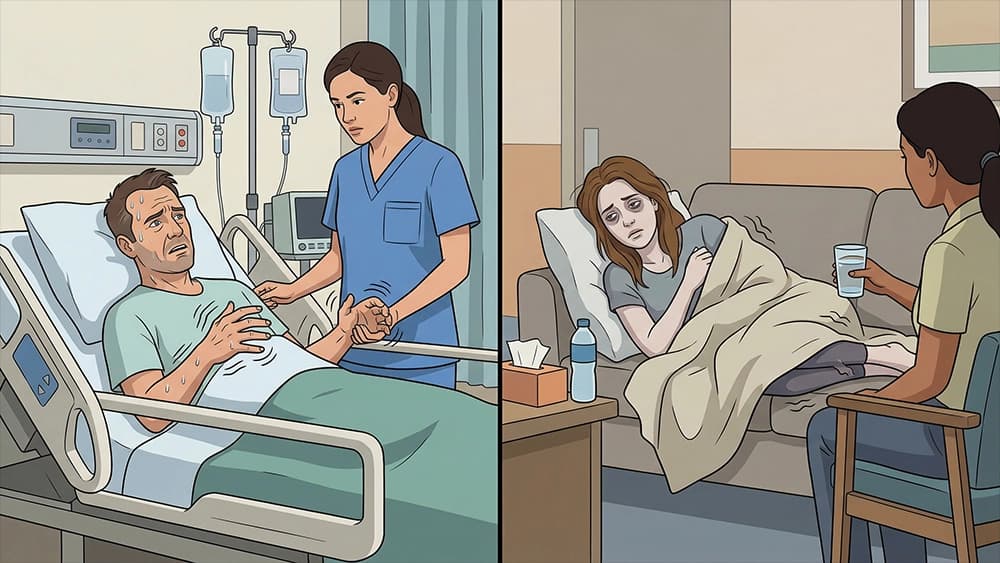
Alcohol detox is often considered higher risk because severe withdrawal can involve seizures, delirium tremens, and dangerous autonomic instability. Opioid detox can still be intense and medically significant, but the most life-threatening complications are more commonly associated with alcohol withdrawal.
- 1Alcohol withdrawal can create life-threatening complications in a way that opioid withdrawal usually does not.
- 2Opioid detox can still be severe and destabilizing, especially when dehydration, relapse risk, or fentanyl exposure are involved.
- 3The comparison should not minimize opioid detox; it should clarify why alcohol withdrawal gets closer monitoring.
- 4Medical detox helps both by reducing danger and improving comfort.
- 5The safest plan depends on the full substance use picture, not only on the drug category.
People sometimes assume all withdrawal is dangerous in the same way, but different substances create different medical risks. Both alcohol detox and opioid detox can be serious, uncomfortable, and relapse-prone. The reason alcohol detox is often considered higher risk is that severe withdrawal can become directly life-threatening.
That distinction matters because it shapes how detox teams monitor symptoms and when they recommend clinical care instead of a home-only plan.

Why alcohol withdrawal gets closer medical attention
Heavy alcohol use changes how the nervous system regulates itself. When alcohol is suddenly removed, the rebound effect can become extreme. Severe cases may involve seizures, delirium tremens, hallucinations, unstable blood pressure, and other complications that require urgent intervention.
That is why alcohol withdrawal is often treated as a medical risk issue first. Even when symptoms begin mildly, clinicians know the picture can worsen over the first several days.
Why opioid detox is still significant
Opioid withdrawal usually is not fatal in the same way alcohol withdrawal can be, but that does not make it easy or harmless. People may experience severe body aches, vomiting, diarrhea, insomnia, agitation, and intense cravings. Those symptoms can drive immediate return to use, which brings overdose risk back into the picture.
In other words, opioid detox may be less likely to produce fatal withdrawal physiology, but it can still be highly destabilizing and dangerous in practice, especially with fentanyl involvement or co-occurring substance use.
Why the comparison should not be oversimplified
The point of comparing alcohol and opioid detox is not to downplay one and exaggerate the other. It is to explain why detox teams often watch alcohol withdrawal more closely for seizure and delirium-related complications. Each person still needs an individualized assessment because age, health history, and polysubstance use change the risk picture quickly.
That is also why people who are withdrawing from both substances at once usually need a more careful detox plan than people expect.
How detox lowers risk for both
Clinical detox provides monitoring, medication support, and rapid response if symptoms escalate. It also creates a bridge into residential treatment or another next step instead of leaving the person to manage recovery alone after the acute phase.
The immediate medical priorities may differ between alcohol and opioid withdrawal, but the larger treatment goal is the same: stabilize safely and keep the person engaged long enough to continue care.
How alcohol and opioid withdrawal differ in practice
Alcohol withdrawal is watched closely because the nervous system can rebound into seizures, delirium tremens, and unstable vital signs. Opioid withdrawal is often less likely to create those exact life-threatening complications, but it can still be severe enough to derail recovery. People may feel intense aches, nausea, diarrhea, insomnia, agitation, and cravings that make return to use feel immediate.
That difference is why the safer plan is not built around comparing which withdrawal feels worse. It is built around which one is more likely to become medically unstable. Alcohol often wins that comparison because the danger can escalate quickly and because the symptoms can shift from uncomfortable to dangerous over a short window.
Why combined withdrawal needs more caution
When alcohol and opioids are both in the picture, the risk profile gets more complicated. The person may be dealing with dehydration, poor sleep, anxiety, or recent fentanyl exposure at the same time that alcohol withdrawal risk is rising. That mix can make symptoms harder to read and can make home-only plans less reliable.
A careful detox team looks at the whole pattern: last use, how much of each substance was involved, whether there has been prior withdrawal trouble, and what support is available if symptoms worsen. That broad view matters because a person can be medically fragile even if one individual symptom seems mild.
What a safer detox plan usually includes
A safer plan usually starts with a clinical assessment instead of a guess. From there, the team decides whether medication, monitoring, fluids, or a higher level of care is needed. If alcohol use is the larger concern, the person may need tighter observation right away. If opioid withdrawal is also involved, the plan may need to account for medication timing, cravings, and relapse risk as well.
In practice, the most useful questions are simple: Is the person stable enough to wait at home? What could happen if they worsen overnight? What level of follow-up care will be in place after the acute phase ends? Those questions help turn a scary comparison into an actual treatment plan.
What to ask if both substances are involved
If alcohol and opioids overlap, ask about detox, residential treatment, and admissions together rather than one at a time. That makes it easier to decide whether the person needs inpatient-style monitoring, whether medication support is appropriate, and what the step-down path should be after stabilization. A program that can explain all three questions clearly is usually better prepared for real-world withdrawal complexity.
Why the next step still matters
Detox can lower the immediate medical risk, but it does not solve cravings, tolerance, trauma, or the reasons the person was using in the first place. After alcohol or opioid withdrawal is stabilized, the treatment team still has to decide whether residential recovery or a lower level of care is the safer next move. If the home environment is unstable, if the person has repeated relapse history, or if more than one substance is involved, the next step can matter as much as the detox itself.
That is why the comparison between alcohol and opioid detox should lead to a plan, not just an opinion. Once the person is safe enough to move forward, the real question becomes how to keep them supported long enough to keep recovering.
That is especially true after a mixed-substance pattern. The follow-up plan should spell out how monitoring, medication, therapy, and transportation will work in the next 24 to 72 hours. If those details are vague, the risk tends to shift from the detox setting back to the home setting.
Families can also ask whether the program will help coordinate the handoff. A clear transfer from detox to the next level of care reduces the chance that the person leaves with a medical win but no recovery structure.
Getting help in Huntington Beach
If you are worried about alcohol, opioids, or both, call Surf City Detox at 888-222-1506. The team can talk through withdrawal risk, explain detox planning, and help you figure out the safest next step.
Related care paths
Frequently Asked Questions
Why is alcohol withdrawal considered more dangerous?
Severe alcohol withdrawal can involve seizures, delirium tremens, and dangerous blood pressure or heart rate changes that can become life-threatening without treatment.
Does that mean opioid withdrawal is safe?
No. Opioid withdrawal can still be extremely difficult, increase relapse risk, and become more complicated when fentanyl or multiple substances are involved.
Can someone need medical detox for both?
Yes. Both alcohol and opioids can require detox, but the monitoring priorities may differ depending on the risk profile.
What if alcohol and opioids are both involved?
That creates a more complex withdrawal picture and usually requires a more careful clinical approach in detox.
Where can I get help in Huntington Beach?
Call Surf City Detox at 888-222-1506 to ask about detox, residential treatment, and admissions.
Sources & References
References used for this article.
- Alcohol Withdrawal Syndrome — NCBI Bookshelf (2024)
- Opioid Withdrawal — NCBI Bookshelf (2024)
- TIP 45: Detoxification and Substance Abuse Treatment — SAMHSA (2015)
Surf City Detox